Tuesday, 22 August 2017

Koning, Keizer, Admiraal

Ik moest ineens aan het rijmpje van de reclame denken: koning, keizer, admiraal...p*** kennen ze allemaal. Een beetje flauw weliswaar, maar ik besefte dat er in de natuur vele dieren zijn die koning, keizer of admiraal heten. En ik heb voorbeelden in het archief.

Koningen


Winterkoninkje   MAE © 2012
Het Winterkoninkje (Troglodytes troglodytes) mag dan klein zijn, maar het is wel degelijk een "koning". En dat, terwijl het 't kleinste vogeltje van Europa is. Staartje altijd parmantig omhoog met prachtige bruine veren op de rug.

Het bezige mannetje bouwt acht tot tien bolvormige nesten in zijn territorium. Zijn vrouwtje kiest het nest dat ze het meest geschikt vindt.


De echte koning voor mij is toch wel de zeer kleurige "Kingfisher". Oftwel de IJsvogel (Alcedo atthis). Het mannetje paait het vrouwtje door een visje aan te bieden. De staart zit dan in de eigen bek, zodat het vrouwtje het visje (eerst de kop) kan opeten. Als ze het accepteert, is de band beklonken.

IJsvogel  MAE © 2015

Keizers

Ik heb in mijn archief twee keizers gevonden: de Keizersmantel vlinder (Argynnis paphia) en de Grote Keizerlibel (Anax imperator).


Keizermantel   MAE © 2015
De keizersmantel was verdwenen uit Nederland, maar wordt de laatste tien jaar steeds meer gezien. Een mooie grote en oranje vlinder, die zeer herkenbaar is.

Deze zag ik in een tuin van een landgoed in Engeland. Inderdaad een keizerlijke verschijning.

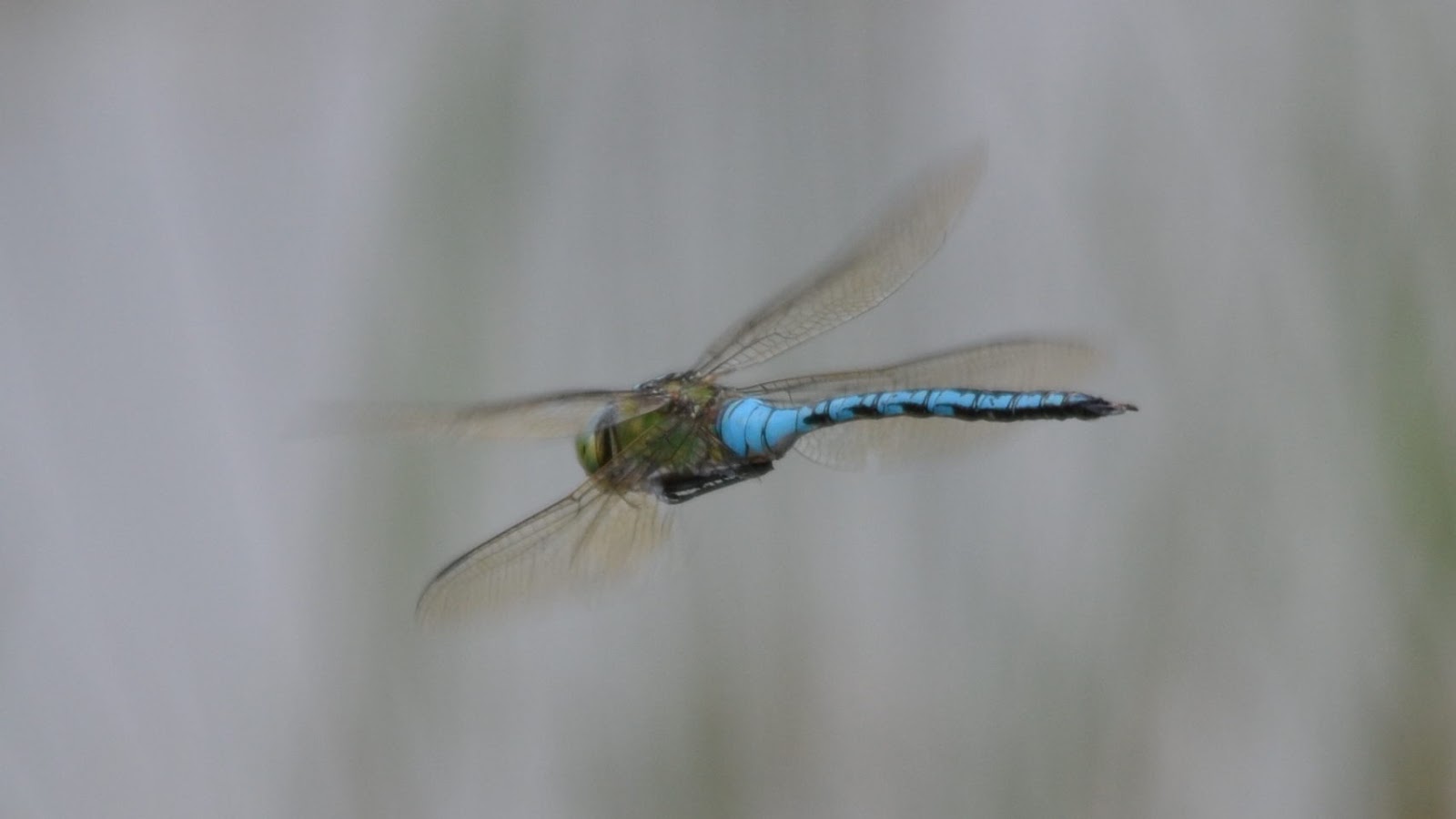
Maar dan de Grote Keizerlibel. In deze keizerlijke kringen is het zo geregeld, dat hij rondvliegt en af en toe paart, en dat zij eitjes mag leggen. Om nieuwe prinsen en prinsessen te produceren waarschijnlijk. Kijk maar...


Grote Keizerlibel  MAE © 2017


Grote Keizerlibel  MAE © 2014


 Admiraals


Atalanta  MAE © 2011
Om admiraals te tonen ga ik terug naar de Engelse naam van twee vlinders: De Red Admiral en de White Admiral. De Atalanta (Vanessa atalanta) en de Kleine IJsvogelvlinder (Limenitis camilla). De "rode" zie je bijna altijd. Op struiken en vlinder-vriendelijke planten in de tuin. Of langs de weg. 

De "witte" zie je niet zo vaak. Deze staat dan ook op de rode lijst van dagvlinders. Dan maar een foto uit mijn archief. Ik zag deze ineens vóór mij landen op een blad. Nog nooit gezien en daarna ook niet opnieuw waargenomen.

Koning, keizer, admiraal...mooi zijn ze allemaal!


Kleine IJsvogelvlinder  MAE © 2015


Friday, 18 August 2017

Beekjuffers

Vandaag een blog over beekjuffers. Echte modepopjes onder de libellen. Je hebt werkpaarden en sierpaarden. Deze "tutte(li)bellen" vallen onvoorwaardelijk onder de tweede categorie. Maar mooi zijn ze!

Weidebeekjuffer (mannetje) MAE © 2017
Er zijn twee soorten beekjuffers (Calopterygidae): de Weidebeekjuffer (Calopteryx splendens) en de Bosbeekjuffer (Calopteryx virgo). Beiden zijn uiteraard te vinden rond beken en kleine stroompjes. Als ze op een rietblad staan, worden de vleugels prachtig in de nek gelegd, waardoor de blauwe kleuren bijna stralen. Althans bij de mannetjes. De vrouwtjes zijn meer groen/bruin.

De twee soorten onderscheiden zich door de vleugels: Weidebeek een blauw/zwarte band aan het eind van de vleugel en Bosbeek volledig blauw.

[..] De habitat betreft vrijwel altijd stromend water, met een vrij hoge zuurstofverzadiging. De hoogste dichtheden worden bereikt op plaatsen met een afwisselend, natuurlijk verloop van de beek, waardoor snel en langzaam stromende delen aanwezig zijn. Het water moet ten minste voor een deel in de zon liggen. Een ruige, overhangende oevervegetatie is belangrijk als zitplaats voor imago's. Delen zonder deze vegetatie worden gemeden. In het water moeten voldoende drijvende of in het water hangende planten aanwezig zijn voor de ei-afzet [..] (bron: website De Vlinderstichting).

Het mannetje kan de vleugels prachtig uitspreiden. Als een trotse pauw bijna. En gelukkig blijven ze poseren voor de camera. Modepopjes dus...


Weidebeekjuffer (vrouwtje) MAE © 2017
Onlangs zag ik een kleine kolonie "Weidebeekjes", rustig vliegend en genietend van de zon, bij de brug over de Tongelreep in Aalst. Iets meer mannetjes dan vrouwtjes, maar er was een dame die even stilzat voor de camera.

Nu blijkt de andere soort, de Bosbeekjuffer, veel zeldzamer te zijn in Nederland. Sterker nog, hij staat op de rode lijst. Maar in mijn archief vond ik nog een foto van zowel het mannetje als van het vrouwtje. Los van elkaar genomen in Engeland. Hieronder zie je de foto's.

Bosbeekjuffer (mannetje) MAE © 2014

Bosbeekjuffer (vrouwtje) MAE © 2013


In het Engels heten deze libellen de Banded respectievelijk Beautiful Demoiselle. Een toepasselijke naam voor deze zeer elegante juffertjes.

Friday, 11 August 2017

De draad oppakken

Oeverzwaluw   MAE © 2016
Na bijna twee jaar begin ik weer eens aan deze blog. Het grote verschil is, dat ik vanaf nu Nederlands schrijf. Want in Nederland zullen de meeste van mijn foto's worden geschoten. Maar een terugblik op de foto's die ik de afgelopen maanden heb geschoten is nog wel even leuk.

Oeverzwaluw   MAE © 2016
Deze Oeverzwaluw (Riparia riparia) is een bewoner van het project, dat bij het  London Wetland Centre al sinds jaar en dag met succes wordt uitgevoerd. Een hele grote muur met pijpen dient als een welkome broedplek voor een hele kolonie. Dit shot is van een afstand genomen, door gewoon te fixeren op een gat en op hoop van zegen af te drukken, zodra er een zwaluw naar binnen vliegt.


Kuifeend   MAE © 2016


En op het onderwerp "vogels als ouders": deze Kuifeend (Aythya fuligula) had een paar kleintjes om op te letten. Dus een slokje water af en toe is dan wel nodig.


Atalanta   MAE © 2016
Maar er waren ook nog wel mooie vlinders onderweg, de afgelopen maanden. Deze Atalanta (Vanessa atalanta) zag ik, zomaar op een tak. Maar het zachte groen levert een prachtige achtergrond op voor de felle kleuren.

En zo ben ik van plan om de komende tijd wat foto's te tonen, die ik de afgelopen periode (sinds augustus 2015) heb genomen.

Kijk ook gerust eens in het archief. Rechts op deze pagina is het overzicht te vinden.

Monday, 17 August 2015

My Year in Butterflies

2015-08-01 Copse Wood 001

This year has been an interesting butterfly year so far. I have seen three new species, of which one was more of a re-discovery…that I didn’t know I had seen before. You are never to old to learn something!

Let’s start with the two “firsts”: the White Admiral and the Silver-washed fritillary.

2015-07-09 Copse Wood 004One evening when I was walking in my favourite woodland area, a very gracious butterfly came almost floating towards me. I didn’t recognize it at once but when it landed I saw that it was indeed a species I hadn’t seen before. So I took some pictures and researched it at home upon return. As it happened, it was the White Admiral (Leminitis camilla).

According to Butterfly Conservation UK, this butterfly…”occurs widely in southern Britain and has spread rapidly since the 1920s, after an earlier contraction. However, population monitoring has shown a dramatic decline in the last 20 years for reasons that are as yet unclear. Adults are often found nectaring on Bramble flowers in rides and clearings. It is a fairly shade-tolerant butterfly, flying in dappled sunlight to lay eggs on Honeysuckle…”


I only took two pictures, but the encounter was remarkable.

2015-07-09 Copse Wood 003

The next “new” butterfly is the Silver-washed Fritlillary (Argynnis paphia) that I saw in the walled garden of Hughenden Manor, one of the many National Trust estates. A very distinctive butterfly that has increased in numbers over the last three decades.

2015-07-19 Hughenden Manor 001


2015-05-16 Stokenchurch 002I thought I saw the Green-veined White (Pieris napi) this year for the first time. But that turned out to be wrong, since I had already seen them over the last two years…without recognizing any difference with the other “Whites”. The distinctive black veins on the under wings should have been a giveaway. Anyhow, now I know.

It is a wide spread butterfly through the UK and I will pay more attention next time I see a white flutterer. This male I spotted  during one of my walks in Buckinghamshire in May this year.

According to Butterfly Conservation UK it “…prefers damp, lush vegetation where the foodplant is found. It usually occurs in hedgerows, ditches, banks of rivers, lakes and ponds, damp meadows, moorland and woodland rides and edges. This butterfly can be found in gardens but favours damp areas…”

I will finish this blog with some butterflies I saw again this year. The Speckled Wood (Pararge aegeria), the Gatekeeper (Pyronia tithonus), the Brimstone (Gonepteryx rhamni), the Small Skipper (Thymelicus sylvestris) and the Six-spot Burnet (Zygaena filipendulae).

2015-07-09 Copse Wood 001 2015-08-01 Copse Wood 003

2015-08-17 Copse Wood 003

2015-07-09 Copse Wood 002 2015-08-08 London Wetland Centre 001

Sunday, 17 August 2014

Birds and Dragonflies

2014-08-04 Rainham Marshes 004

Unfortunately, my Summer Holiday is over. But I had set a target to see as many birds, butterflies or dragonflies (damselflies included) as possible…through my camera. I did help that I found some great places; the weather was a friend as well. Here are the results with not too much text to add. I will not show my butterfly pictures in this blog, but I did see quite a few.

It was a perfect time to see the production of a new generation of dragonflies in full swing. First a mating picture of the Black-tailed Skimmer (Orthetrum cancellatum).

2014-08-03 Ruislip Lido 003

A typical mating ritual while flying over a pond and with the female constantly dipping her tail in the water to lay her fertilised eggs. These are Common Darters (Sympetrum striolatum):

2014-08-16 Copse Wood 005

After I refilled the birdfeeders in my garden, I have been sitting for hours on end to see if there were any customers for my food. Eventually I could take some pictures of a Blue Tit (Cyanistes caeruleus). The patience you need….!

2014-08-06 Summer Visitors 013 

This House Sparrow (Passer domesticus) tried to get in one of the cages at London Zoo. They are declining in the urban habitat, but this might go just a little bit too far.

2014-08-12 London Zoo 003

When I revisited Rainham Marshes (after I became a member of the RSPB) I found a Black-tailed Gotwit (Limosa limosa) and a Snipe  (Gallinago gallinago) together in a pond.

2014-08-04 Rainham Marshes 012

I also visited another RSBP reserve: RSPB Rye Meads. Again a little paradise in an urban area. I took many pictures, but here are just a few. First a Common Tern (Sterna hirundo) in flight. There were many around.

2014-08-07 Rye Meads 010

But the best moment over there was, when I took a picture of a Kingfisher (Alcedo atthis) upon its return to feed the kids. All in all it has been a very satisfactory period of nature photography.

2014-08-07 Rye Meads 013

Saturday, 2 August 2014

Lookalikes

2013-08-23 Copse Wood 002

Just recently I learnt the differences between the Common Darter (Sympetrum striolatum) and the Ruddy darter (Sympetrum sanguinemum). From a distance (and before you study the picture at home afterwards) they look very much alike. But I had the same trouble to see the difference between some other insects, and therefore I present a little guide to lookalikes. I already wrote a blog on some of the insects before.

Spotted Burnets

2013-07-28 London Wetland Centre 012Let’s start with something very easy. By just counting the spots on the wings, you know which one it is; either a Five-spot Burnet (Zygaena Trifolii) or a Six-spot Burnet (Zygaena Filipendulae), both of the family of the Zygaenidae. 2014-07-02 Croxley Common Moor 007

They are actually moths, but they can be seen at daytime. They both visit a range of flowers and can sometimes be seen together on one flower.

Unfortunately I’ve only got pictures of the six-spotted . The one that has a similar look from a distance however is the Cinnabar Moth (Tyria jacobaeae) as shown on the right.

Skippers

It took me quite a while, before I could distinguish between the Large Skipper (Ochlodes Sylvanus) and the Small Skipper (Thymelicus Sylvestris), both of the family of the Hesperiidae. Because they are quite small and almost equal in size. Their colours are just the same and you even find them together in the same habitat. The most obvious difference is the pattern of the light brown markings on their orange wings. The Large Skipper has a more chequered pattern whereas the Small Skipper has thin, prolonged  lines.

2013-07-20 Copse Wood 002 2012-07-23 Copse Wood 001

Blues

So far, I have only see the Common Blue (Polyommatus Icarus) and the Holly blue (Celastrina Argiolus) of the blue members of the family of Lycaenidae. From a distance they are just rays of bright fluttering blue , but even when you take a picture, you already see the difference. The pictures below should speak for itself.

2014-07-26 Copse Wood 014 2013-09-01 Broadwater Lake 007

Blue-coloured Dragonflies

There are two blue-coloured male dragonflies that very much look alike as well: The Broad-bodied Chaser (Libellula depressa) and the Black-tailed Skimmer (Orthetrum cancellatum). I have been mistaken several times, but I think I got it now. For the Broad-bodied Chaser has typical yellow patches on its abdomen but the Black-tailed Skimmer, more importantly, has a black colouring at its tail.

2014-07-26 Copse Wood 011 2014-07-03 Dagenham Chase 003

Red-coloured Dragonflies

2013-08-10 Slimbridge Wetland Centre 031But now something more complicated: the Common Darter (Sympetrum striolatum) vs. the Ruddy Darter (Sympetrum sanguineum). There are three features that distinguish the Common from the Ruddy:

  1. The Common Darter is bigger.
  2. The Common Darter has yellow diagonal stripes on its legs and the Rudy Darter has all-black legs.
  3. The Rudy Darter has yellow/gold colouring at the base of its wings.

The picture on the right shows the black legs and the golden wing base of the Ruddy Darter quite well. The picture on top of this blog shows the other darter’s features, I believe.


But to convince ourselves, I will end this blog with another picture of the beautiful and very “uncommon” Common Darter.

2013-10-06 London Wetland Centre 016

Sunday, 6 July 2014

New Life and New Venues

2014-07-06 Summer Visitors 002

This afternoon I saw a juvenile Blackbird (Turdus merula) on the garden fence. It was the last of a series of pictures I took last week of all kinds of phases leading towards new life in nature. But of course there was so much more to see as well! Always nice to have a week off…with some splendid weather! Here are some pictures.

2014-07-01 London Wetland Centre 009The Tufted Ducks (Aythya fuligula) in the London Wetland Centre had, as always, many ducklings to parade before my camera, although this mum only showed one of them.

I can remember having seen more than 10 in one nest a couple of years ago. There were some more elsewhere…

2014-07-01 London Wetland Centre 011


2014-07-01 London Wetland Centre 012The Blue Emperor Dragonfly (Anax imperator) was ovipositoning in another part of the Wetland Centre and this gave ample opportunity to take some decent pictures.

Later in the week I saw two Common Blue damselflies in a phase of procreation earlier.

2014-07-04 Broadwater Lake 005


The amount of dragon- and damselflies this year is fantastic and this will go on for quite some time! A true joy for the camera, that’s for sure!

It is only a bit frustrating that they are such skilful aviators, because it is hard to get them on camera.


2014-07-03 Dagenham Chase 008I found a new and beautiful park in London: The Dagenham Chase, in the Barking area. The habitat varies from wetland to grassland with some open ponds as well. A true paradise in the middle of London.

Some Common Terns (Sterna hirundo) were flying over one of the ponds and this shot was the best I could make. They are so quick in the air…2014-07-03 Dagenham Chase 003

Thankfully a Black-tailed Skimmer (Orthetrum cancellatum) was kind enough to sit down for a while. I have seen them more this year than any other time. And although Dagenham Chase was a new venue for me, there were of course some old classics: the Greylag Goose (Anser anser) and the Great-crested Grebe (Podiceps cristatus).

2014-07-03 Dagenham Chase 005 2014-07-03 Dagenham Chase 007

I will end this blog with a picture of a butterfly that I haven’t seen for a while: the Red Admiral (Vanessa atalanta). They are around, just not where I was. I saw this one at Broadwater Lake, near Harefield.

2014-07-04 Broadwater Lake 009