Saturday, 20 April 2013

First Butterflies

Small Copper

In Dutch: Kleine Vuurvlinder. In Latin: Lycaena Phlaeas.

 MAE © 2012
The last butterfly I took a picture of was a Small Copper back in October 2012. There could have been more butterflies later, but I just did not look for them afterwards. However, there were not so much butterflies anyway last year. A combination of available flowers and the bad weather of last Summer resulted in a significant lower amount of butterflies. This trend will hopefully not continue, because I wouldn't want to think about what would happen to the balance in nature.

Back to the Small Copper; I have only seen one ever, but it is a beautiful little insect. You can find them almost anywere, which is just as well, since I only spotted this one.

Today I finally spotted butterflies again. In fact they are all from the same family: the Nymphalidae. All three are active in the early Spring and can be found in open landscape and grassland. They are the Comma, the Peackock (both seen today at Copse Wood, Middlesex) and the Small Tortoiseshell (seen earlier today at Croxley Common Moorrespectively.

I did see one or two Brimstones  as well (in Dutch: Citroenvlinder. In Latin: Gonepteryx Rhamni) but they did not want to be caught in front of my camera. Let's  just hope there will indeed be more butterflies this year. The signs were positive today, since they were all chasing each other in packs of four. These proceedings have hopefully resulted in some reproduction.


Comma 

In Dutch: Gehakkelde Aurelia. In Latin: Polygonia C-Album.

MAE © 2013

Peacock

In Dutch: Dagpauwoog. In Latin: Inachis Io.
MAE © 2013


Small Tortoiseshell

In Dutch: Kleine Vos. In Latin: Arglais Urticae
MAE © 2013


Sunday, 7 April 2013

Small Birds

Taking pictures of small birds is no job for the impatient camerman! They are most of the time very active and they will almost always hide behind a small leaf or are too far away to properly spot them. And once you think you have a good camera angle, you have to react quickly with your zoom and autofocus, because they are flown before you know it. Therefore it is with some pride, that I can show some results. 


Long-tailed Tit MAE ©2013
The Long-tailed Tits that I have seen so far, fly up and down from tree to tree or bush in an almost regular pattern. They can be seen in woodland, farmland hedgerows, scrubland, parkland and gardens. In winter they form flocks with other tit species. Once you have seen them,you will not forget the distinctive long tail and their beautiful black/white/brown colours.

They are very social birds, and will constantly call each other. They eat insects and caterpillars. In Dutch they are called: Staartmees; in Latin they are called: Aegithalos Caudatus.
Long-tailed Tit MAE ©2013


 Blue Tits MAE ©2013
The most common and well known of the tits is the Great Tit (in Dutch: Koolmees; in Latin: Parus Major). But being common, does not mean being ugly. You can see a picture further down.

These however are Blue Tits (in Dutch: Pimpelmees; in Latin: Parus Caeruleus).

They eat insects as well as nuts.

Great Tit MAE ©2013
Robin MAE ©2011

The Robin cannot be left out from this blog. They have the most beautiful songs and they are not shy at all. They will not fly away when you try to take a picture, which does help.

I have regularly seen a Robin sitting next to me when I was working in the garden. Just inspecting my hard work...

In Dutch: Roodborst. In Latin: Erithacus Rubecua.


Chaffinch MAE ©2013
And finally one other very well known bird: the Chaffinch (in Dutch: Vink; in Latin: Fringilla Coelebs).

It took me quite a while, before I could take a picture. Which is a shame, because they have beautiful colours.

They can be seen wherever there are trees.

Saturday, 30 March 2013

Zoological Society London

Wild African Dogs at London MAE ©  2013
The London Zoo is part of the Zoological Society London or ZSL for short. Their website states:

Founded in 1826, the Zoological Society of London (ZSL) is an international scientific, conservation and educational charity whose mission is to promote and achieve the worldwide conservation of animals and their habitats. Our mission is realised through our groundbreaking science, our active conservation projects in more than 50 countries and our two zoos, ZSL London Zoo and ZSL Whipsnade Zoo.

Although the orignal zoo in London is still a typical old fashioned one with small enclosures for the animals, they are expanding and changing in order to give the animals more space. This is definitely achieved at their other location in Whipsnade, but they are changing the London Zoo as well. In this blog, I would like to show how this looks from behind the camera.


MAE © 2011
The American Flamengo's are so brightly coloured, that you can see them from far away. It is almost as if the zoo keepers re-paint them on a regular basis. 

There are about two dozen of these birds at Whipsnade. They always look very releaxed with their feet in the little pond.


Even a Rhinoceros needs a bath every now and then. And although you never know with these short-sighted and grumpy animals, this one seems to enjoy it. There are quite a few Rhinos at Whipsnade, with plenty of room outdoors to live a happy life.


MAE © 2011


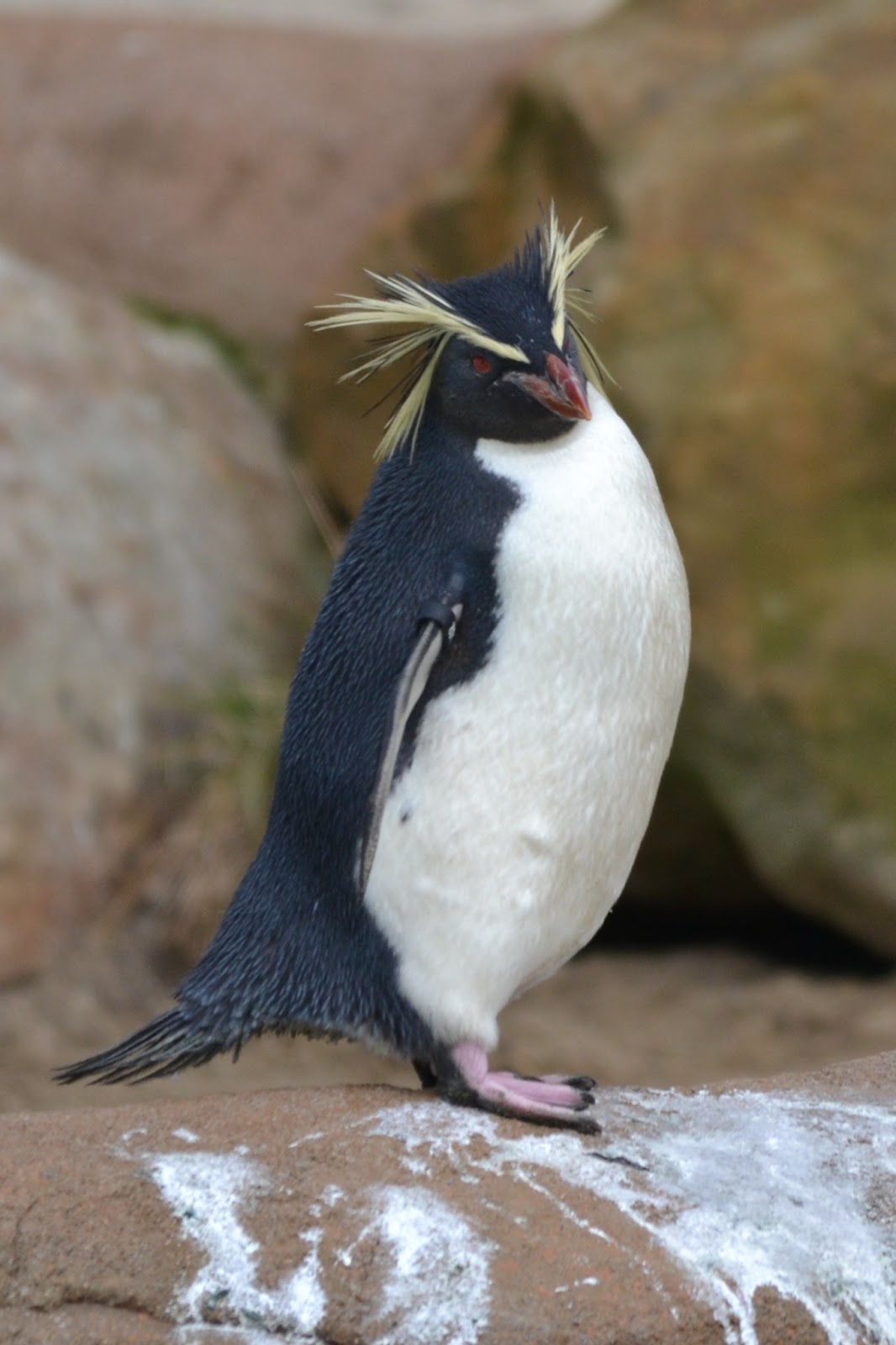
Rockhopper Penguin MAE © 2013
Grey Heron landing for opportuniy food MAE © 2013
The new Penguin Beach is a real attraction in the London Zoo to al visitors, whatever age. Twice a day, the keepers feed the penguins and explain some things about them as well. This is however irrelevant for the ever watchting Grey Heron, who waits for it's moment to land on the beach and (hopefully) get something to eat as well.


MAE © 2011
MAE © 2013
And finally a greeting (?) from the Chimpanzees, who don't seem to be bothered by all the attention. One is just eating his 2 out of his 5-a-day apples, and the other is practicing on it's wave skills. The Chimpanzees do have a very nice playing area with lot's of room at Whipsnade.


Monday, 25 March 2013

Croxley Common Moor, an unknown jewel

Bridge over the river Gade MAE © 2011 
More than a two years ago, I discovered a hidden gem, just outside the tiny village of Croxley Green (Herts). Just next to the Grand Union Canal (walking down from the Tube station), and crossing the river Gade, there is  a beautiful field with low bushes and some trees: Croxley Common Moor or CCM for short.

The website of Friends of CCCM states:


Croxley Common Moor has been registered as a Site of Special Scientific Interest (SSSI) due to the rarity of its plant life; it is also designated a Local Nature Reserve (LNR) in acknowledgement of the contribution local residents make to its management. This protection is essential because there are only one or two similar river valley sites still in existence in Hertfordshire.

I have been walking many times over the Moor, wandering what new species I would catch with my camera. And there are quite some "firsts" that I would like to share.

Long-tailed Tit MAE © 2013
Only recently I saw my first Long-tailed Tit. This brown and white bird which is called Staartmees in Dutch and Aegithalos Caudatus.in Latin, has indeed a very long tail. It is a very restless creature, so taking a picture of it is quite a challenge. But is worth the wait, since it is indeed a very beautiful little fellow.

Now Spring is gradually arriving the birds all seem to become more restless and quick; taking pictures requires more patience for sure.


Small Tortoiseshell MAE © 2011
And since I am proudly showing some firsts, I have also taken my first (and so far my only) pictures of this very colour butterfly called: Small Tortoiseshell. Everybody knows it, but I haven't seen them very often. This one was very happy sitting on a thistel and had the courtesy to stay put while I was taking pictures. In Dutch it is called Kleine Vos and in Latin it is called Aglais Urticae.

The British Butterfly website from Steven Cheshire confirms my fears:

Recent years have seen a rapid decline in numbers of Small Tortoiseshells across Britain. The primary reason for this decline is thought to be due to the expanding range of a tachinid parasitoid fly called Sturmia bella which was first recorded in Britain in 1999.

Let's hope the decline can be stopped.


Caterpillar of the Cinnabar Moth MAE © 2011
One of the typical dilemma's for the Friends of the CCM is the Ragworth growth. This yellow plant is poisonous to livestock and cows do graze on the CCM on a regular bases to keep the habitat in it's original form. Therefore the friends have to keep the ragworth in check by weeding (with volunteers) every month in the Spring and Summer. But this activity has to stop once the caterpillars of the Cinnabar Moth (in Dutch: St. Jacobsvlinder; in Latin: Tyria Jacobaeaearrive, because it is the only thing they eat.

And so the preservation of nature is always a matter of making the right choices at the right time.

You can see more pictures of the CCM at the special FlickRiver Group that I have set up. But why don't you have a look for yourself? It is worth the travel to Croxley Green. Just cross the road from the tubestation, Go left and follow the small road (right turn after 100 yards) down to the canal. After crossing the lock you will find the entrance of the Moor.


Sunday, 11 March 2012

Almost Spring at London Wetland Centre

Two grazing Wigeons. MAE©2012
Earlier I wrote that I was facinated by the Wigeon. I even described the Wigeon (in Dutch: Smient; In Latin: Anas Penelope) as a mystical duck. Since my first sighting in November 2011 I have been seeing them many more times, especially in the London Wetland Centre. It is known that they hardly dive and that they eat ashore. It is also known that they migrate in the Summer to iceland and Norway, even to Siberia, in order to breed.

So this afternoon, I was actually not surprised to see lots of Wigeons eating their hart out on the juicy grass lands in the London Wetland Centre. They seemed to be having no other purpose in life, than to make sure they stored enough energy for their great flight North. When this will happen, I do not know. But I am grateful they gave me a peek in their day-to-day life.

Many Cormorants and Herons gathered. MAE©2012
Talking of great gatherings: I have never seen so many Cormorants together (in Dutch: Aalscholver; In Latin: Phalacrocorax carbo). There must be a lot of fish in the lake, because this afternoon they gathered, together with quite a lot of Grey Herons, on one of the islands. waiting for something to happen. Both types of birds eat fish, although the Cormorant swims and dives for it, whereas the Heron just uses it's beek as a spear. By the way, a couple of years ago I used to live alongside a small canal where anglers would give their catch to the herons. They would just stand quietly next to the angler, waiting for a snack...

Anyway, back to the Cormorants. After fishing, cormorants go ashore, and are frequently seen holding their wings out in the sun. All cormorants have preen gland secretions that are used ostensibly to keep the feathers waterproof. So with the nice Spring sun this afternoon, it must have been a great day for them too.

Bewick's Swan. MAE©2012
I have been surprised during any visit to the wetland centre so far. Today was no exception. Just outside the main area, there were two Bewick's swans enjoying the sun. These smaller versions of the Whooper Swan have not been seen before in the wetland centre by me. It is not easy to see the difference between the two. The Whooper (in Dutch: Wilde Zwaan; in Latin: Cygnus Cygnus) has more yellow on the beek and is larger. The Bewick's Swan (In Dutch: Kleine Zwaan; In Latin: Cygnus Columbianus) has therefore less yellow on the beek and is smaller.


Whooper Swan. MAE©2011

But both types are nevertheless magnificent birds and it was very nice to see the Bewick's for the first time. I can now compare the differences using the picture I took last November in regent's Park.


All in all an extremly pleasant afternoon, together with my son, in the everytime surprising and always entertaining London Wetland Centre... where Spring is definitely on its way.

Spring at London Wetland Centre. MAE©2012

Saturday, 11 February 2012

Gems in the Snow

A little, frozen pond. MAE ©2012
After a week of some snow and some freeze, I wanted to check out the woodland nearby. Just to see how much snow there was. And more importantly, if there were still some colours to be found amongst the white. In this time of the season, you normally expect something like this. The ice is still there and some snow is covering it.

A total silent scene as if the time has stood still. No activity, not even some skating.


Women's tee on 12th hole. MAE©2012
Therefore I was pleasantly surprised to see that if you wanted, you could still play golf. I heard from members that the golfcourse is actually closed for another week. But even if it wasn't closed, you would need some very colourful balls and a robust set of clubs. You need a snowmobile for transport and a lot of patience and stamina. Nevertheless, I was pleased to find these red gems.


MAE©2012
But still this was too artificial. I wanted some natural colours and therefore I walked further on. And finally, I found some real gems in the snow. It really seems as if nature just finds he right combination of colours to be seen together. With the bright sunshine, the yellow just screamed at you. But in a very nice way. I don't have to visit an artgallery, because it is just out there. For free. You only have to see it in order to see it.

And the gems kept on coming. What a nice way to spend your afternoon. Just walk an watch, take some pictures and share it afterwards.


MAE©2012


Saturday, 7 January 2012

Regent's Park, a duck extravaganza

Today was a fine day for a walk in the Regent's Park in London. The park has a decent pond with quite some different ducks and geese. But first some history.

A Great Crested Grebe. MAE©2012


The Royal Society for the Protection of Birds, the RSPB, was formed to counter the barbarous trade in plumes for women's hats, a fashion responsible for the destruction of many thousands of egrets, birds of paradise and other species whose plumes had become fashionable in the late Victorian era.


There had already been concern earlier in the century about the wholesale destruction of such native birds as great crested grebes and kittiwakes for their plumage, leading to such early legislation as the Sea Birds Preservation Act of 1869 and the Wild Birds Protection Act of 1880, but the trigger which led to the foundation of the Society for the Protection of Birds in 1889 was the continued wearing of ever more exotic plumes. Indeed the young Society was so successful that it was granted its Royal Charter in 1904, just 15 years after being founded.


As a tribute, I took a picture of this Great crested Grebe in the Park. In Dutch this bird is known as a fuut. The Latin name is: Podiceps Cristatus.


Northern Pintails. MAE©2012 

 But there were much more ducks to be seen today. A group of Northern Pintails was having a meeting near one of the bridges. I had seen two pintails a couple of weeks earlier in the park, but today there were much more swimming around. Very proud and distinguished ducks with their funny tail feathers pointing in the air. The Dutch name is the same: Pijlstaart. In Latin these duck are called: Anas Acuta.


Two releaxed Wigeons. MAE©2012

And finally a small surprise: There was a Wigeon couple amongst the ducks. they normally keep a low profile, but these two apparently were happy with the audience. All in all a nice day for a nice walk.